
The U.S. Drought Monitor currently shows extensive areas of extreme (D3) and exceptional (D4) drought across western and central states. While drought has become an all-too-common occurrence in many of the affected areas, it presents unique challenges every time it is encountered. The severity and duration of drought can have both short- and long-term impacts on livestock, people, land, and communities.
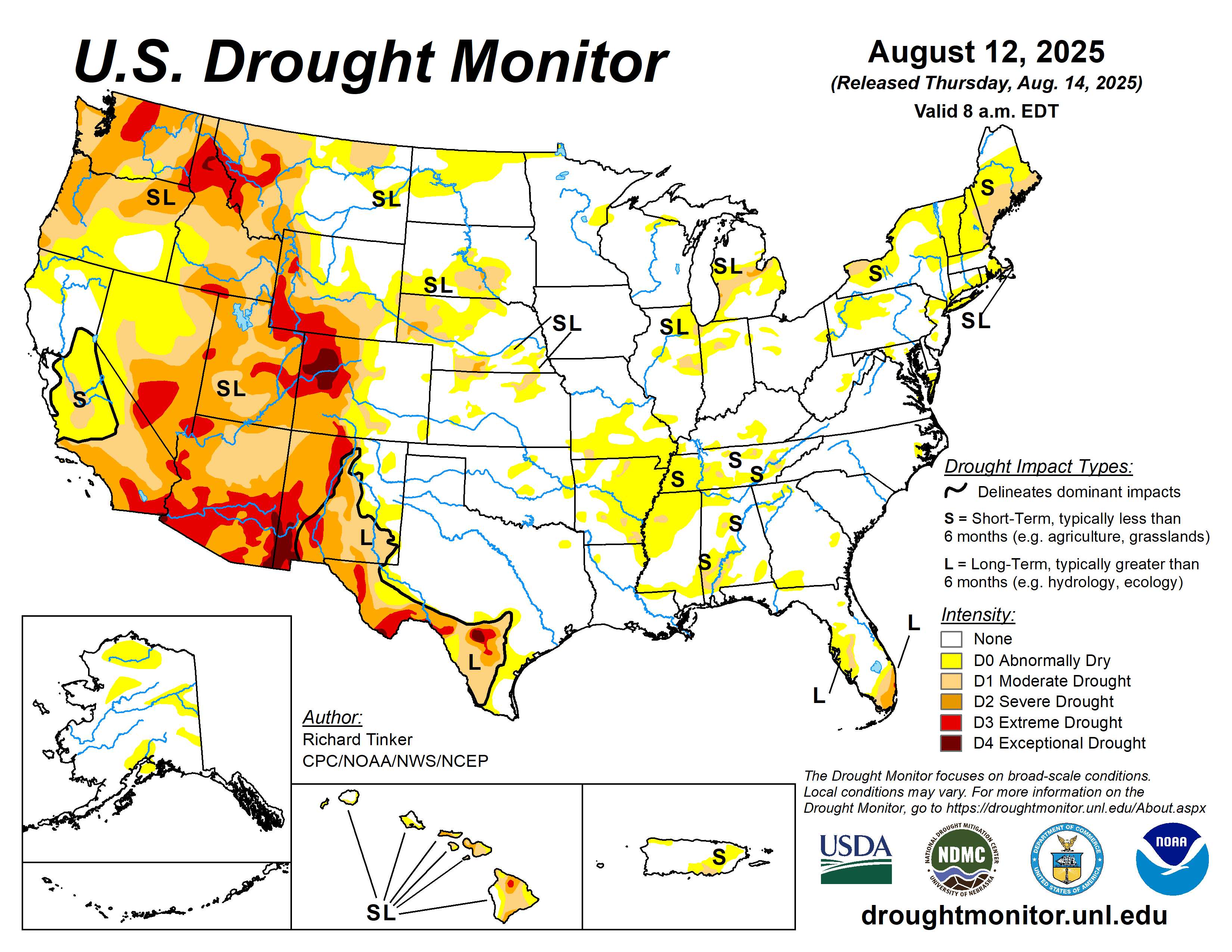
Source: U.S. Drought Monitor (Updated Weekly)
Drought creates challenges to both quantity and quality of available forage. Drought-affected forage contains more fiber and less total digestible nutrients. Vitamin A and macrominerals like calcium and phosphorus are also typically lower during drought, as well as some micronutrients like copper and zinc. SmartLic supplements are fortified with vitamins and minerals, reducing the need for separate feeders and helping overcome potential deficiencies in drought-stressed forage.
Enhancing Rumen Health
Ruminally degradable protein (RDP) is often the first limiting nutrient in dormant forage. Crude protein levels below 7% can severely impact nitrogen availability for rumen microbes, which reduces forage digestibility and overall animal performance. The core principle of feeding during drought is to feed the rumen first, which in turn supports the cow. SmartLic protein supplements provide nitrogen to rumen microbes, creating a positive associative effect on fiber fermentation and increasing available energy.
A trial conducted at Kansas State University demonstrated that cattle consuming poor-quality forage and supplemented with our low-moisture protein blocks saw increases of over 30% in digestible feed intake and more than 90% in digestible crude protein compared to a control group.
Directing Grazing Patterns
In addition to improving protein and energy status, university research using GPS collars has shown that providing low-moisture blocks can alter grazing distribution. Compared to traditional loose mineral, the percentage of non-feeders was reduced by nearly 20%, and the frequency of visits to the supplement increased. This strategic placement of supplement tubs can help mitigate overgrazing in sensitive areas and encourage use of underutilized regions during drought.
Conserving Forage Resources
While the primary goal is to maintain the health and productivity of the cowherd during drought, it is also important to manage forage resources effectively to conserve available forage and minimize long-term negative effects.
Although SmartLic supplements can help meet nutrient requirements when forage quality is poor, they are not a substitute for a lack of available forage. Strategies such as replacing a portion of the diet with hay or other fiber-based feeds, utilizing crop residues or alternative forage, adjusting stocking rates, or relocating cows to a drylot can help reduce negative impacts from overgrazing on native rangelands and pastures.
When forage is present but nutritionally lacking, supplementation remains one of the more effective tools available — supporting rumen function, filling mineral gaps, and giving ranchers some options on how pastures get used during a difficult season.